We learn to speak, to hesitate, to refuse. Not just skills, but pressures. A family’s way of apologizing. A city’s habit of queueing. A courtroom’s ritual of standing. That weight behind the moment of choice is not “just culture.” It is moral memory—inherited patterns that steer action before we can articulate reasons. The philosophy of mind usually starts from inside the skull; yet the mind keeps its shape by leaning on what came before. Less a sealed container, more a relay of constraints. And those constraints remember.
Information as Substrate: Memory Before Minds, and Minds Within Memory
If reality is organized not primarily as stuff but as pattern—relations, regularities, constraints—then memory is not a late add-on. It is what holds a world together long enough for organisms to appear inside it. On that picture, a mind sits where patterns compress, intersect, and get reissued as intentions. People call this “consciousness” and make it sound like a lamp. It’s closer to a local receiver: a temporary compression of signals from body, environment, history. The self is not origin; the self is a bundle of shortcuts that work—until they don’t.
So what is moral memory? The slow accumulation of constraints that make some acts feel natural and others unthinkable—before the argument starts. You met it as a child in bedtime stories and the parent who paused before crossing on a yellow light. You met it again in codes of hospitality older than any nation-state. It’s not reducible to a text, though texts help. It lives in liturgies, guild rules, school rituals, tax policy, street design. “Don’t speed past the playground” becomes a speed bump, then a line item in the budget, then a reflex in the foot. Pattern to infrastructure to nerve.
Religious traditions, read without sneering or sentimentality, function as civilizational memory palaces. They cache intergenerational experiments in cooperation and self-restraint. They’re noisy, mixed with power, sometimes cruel—yet they persist because they store costly know‑how: how to bury the dead with dignity, how to lend without dissolving trust, how to repent in public. Anthropologists have tracked the transmission channels; cognitive science fills in how repeated ritual binds value to perception. The upshot is simple and awkward: minds are scaffolded by shared memory. You can’t talk about agency without talking about the inherited “background hum” that makes some futures feel reachable and others closed.
Personal Agency as Compression: Guilt, Repair, and the Editing of the Past
Inside a single life, memory does more than store facts. It edits salience. It rearranges the felt map of what counts. A minor insult can loom larger than a major kindness, not because it was bigger, but because it trained a vigilance circuit that now colors everything else. That’s moral memory at the scale of a person: tracked across neural plasticity, habituation, story. A choice today is not free-floating; it rides a slope set by what got reinforced yesterday. If the slope tilts away from generosity—scarcity, betrayal, humiliation—then “doing the right thing” costs more energy. Conversely, in communities where repair is modeled and enacted, the gradient tilts the other way. The physics of habit becomes ethics without grand speeches.
Notice how philosophy of mind questions—What is the self? What is intention?—touch ground here. The “I” that decides is not identical to the stream of narrative that justifies. The deciding process is partly subpersonal, trained through repetition, time, sleep. And the narrative self catches up, writing reasons after the fact. This isn’t an insult to responsibility; it’s a reminder that responsibility includes maintenance. If we want freedom that isn’t hollow, we have to cultivate the conditions under which better options become viable. That maintenance is memory work: confession, journaling, therapy, reconciliation commissions, even the ordinary apology that feels smaller than it is. Each one re-weights salience. Each one re-teaches the body how to expect the future.
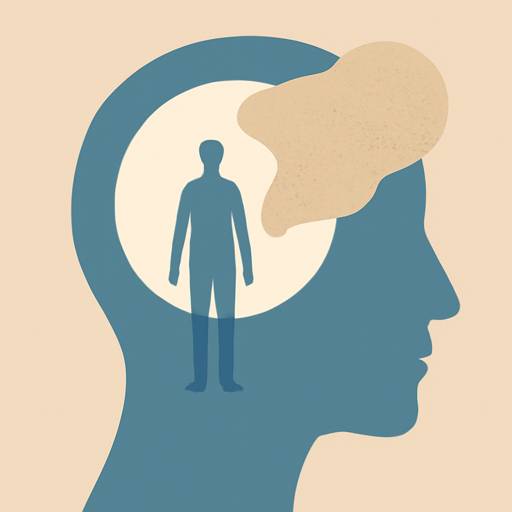
There’s a hard edge too: forgetting is not a bug. Healthy forgetting—letting go of perfect recall of the wound—is part of moral intelligence. Not denial. Not erasure. A controlled fade. We do this socially via sunsets on punishment, sealed juvenile records, amnesties with conditions. We do it personally by retelling the harm in a frame that leaves room to keep living. Forgiveness is not naïve; it is the recalibration of the threat model so the past stops driving every reflex. In that sense, moral memory is less “archive” and more “priority queue,” continuously pruned, with guardrails against both amnesia and obsession. Fail the pruning and you get cycles of vengeance. Fail the guardrails and you get vanity “fresh starts” that simply repeat the same harms with cleaner branding.
Artificial Minds, Corporate Time, and the Problem of Borrowed Conscience
Now the awkward part. We are building systems that act without the slow sedimentation of biological and cultural moral memory. We paste values into models as if conscience were a plugin. The audit passes. The pressure resumes. The patch drifts. Meanwhile, these systems learn from data that encodes old constraints and old harms, but without the rituals that made those constraints bearable. They copy the outputs of law, not the centuries of argument and grief that taught the law to bend. There’s a difference. One is an instruction set; the other is a history of failure disciplined into form.
Corporate governance prefers fast cycles: ship, measure, pivot. Moral memory lives on a different clock. It requires slowness, cross‑generation feedback, social pain that is neither commodified nor optimized away. A company can simulate deliberation—advisory boards, red teams, “values statements.” But without binding commitments that persist through leadership changes and revenue shocks, you get what everyone recognizes by now: moral patching. A new layer of guardrails on a system whose reward function is unchanged. In practice that means brittle compliance. It works until the incentive points elsewhere.
If we took the philosophy of mind and moral memory seriously for engineered agents, we would design for constraint before capability. Build memory that resists instantaneous overwriting. Layer institutional recall into the architecture: not just retrieval of “policies,” but contested, versioned records of why a policy hardened after failure. Introduce friction: cooling periods before deploying new behaviors that touch the public, obligations to rehearse harms on synthetic but adversarial cases, sunrises and sunsets on permissions with automatic review. Accept that some values must be expensive to change. And let systems forget too, on purpose, where retention invites misuse—because sometimes the moral act is to drop the key rather than store it forever.
There are glimpses of this outside the lab. Aviation learned from catastrophe by building mandatory reporting and blameless postmortems—moral memory encoded as procedure, not as PR. Medicine’s morbidity and mortality conferences. Community review boards that actually change patrol routes. Not perfect, not pure, but closer to the necessary time horizon. Contrast that with algorithmic trading or content moderation whiplash: policy toggles, mass effects, no shared memory deep enough to stabilize behavior. If minds are receivers of pattern, then institutions are the transmitters. They either keep the signal honest, or the noise wins.
None of this requires mysticism. It requires admitting that philosophy of mind was never just about inner theater. Minds are made feasible by the scaffolds they inherit. When those scaffolds are strong, people can be braver than they fear and kinder than they knew. When they’re weak, people are left to improvise dignity out of adrenaline. The same will be true of artificial agents, should we keep insisting they’re “just tools” until the tools start setting the pace. Perhaps design should begin with remembered limits—constraints as first‑class citizens—so the future does not arrive as an echo of our oldest mistakes, only faster.

Rio biochemist turned Tallinn cyber-security strategist. Thiago explains CRISPR diagnostics, Estonian e-residency hacks, and samba rhythm theory. Weekends find him drumming in indie bars and brewing cold-brew chimarrão for colleagues.