What a Jewellery Content Creation Tool Really Does—and Why It Matters Now
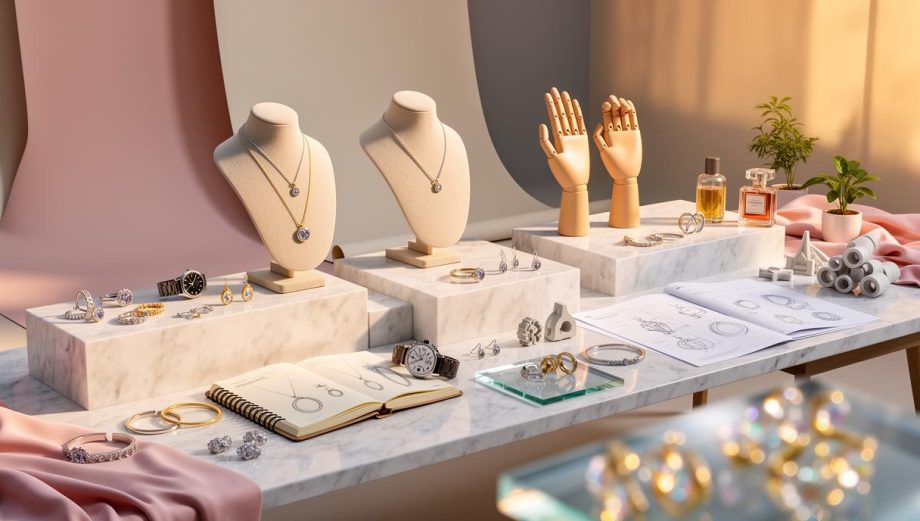
A modern jewellery content creation tool brings the entire visual production pipeline—concept, design, shoot, and post—into a single, streamlined workspace. Instead of coordinating studios, models, stylists, sets, and retouchers, brands and makers can transform sketches, CAD files, and simple product photos into market-ready images in hours. This shift isn’t just a matter of convenience; it’s a competitive edge in an attention economy where shoppers expect rich, premium visuals across e‑commerce, social, and print.
Jewellery is uniquely challenging to photograph. Metals need crisp specular highlights without harsh hotspots. Gemstones must show depth, fire, and dispersion without looking artificial. Fine textures—milgrain edges, pavé settings, hammered finishes—can disappear under poor lighting. A capable tool handles these materials natively, allowing precise control of reflections, shadows, and micro-detail so every facet reads accurately. The result is consistent, repeatable output that feels handcrafted and luxurious, not over-processed.
Speed is another advantage. Launch calendars are tighter; drops and capsule collections happen year-round; collaborations appear with weeks’ notice. A platform that generates studio-grade packshots, lifestyle scenes, and on-model variations quickly supports agile marketing without compromising quality. With presets for marketplaces and social channels, teams can output 2K and 4K imagery optimized for PDPs, lookbooks, email hero images, and high-resolution print—no back-and-forth with multiple vendors.
For independent artisans and growing luxury labels, costs fall dramatically when logistics and reshoots are minimized. Need a new background to match a seasonal palette? Swap the scene instead of booking a location. Need a ring photographed in three colorways with two stone sizes? Duplicate variants in minutes. Because the process is non-destructive and template-driven, creative ideas can be explored freely: alternate compositions for A/B testing, subtle lighting shifts to emphasize engravings, or different hand models to reflect local markets. These workflows mean faster listings, faster campaigns, and faster sell-through—while protecting brand consistency at scale.
Key Features to Look For: From CAD-to-Render to On-Model Imagery
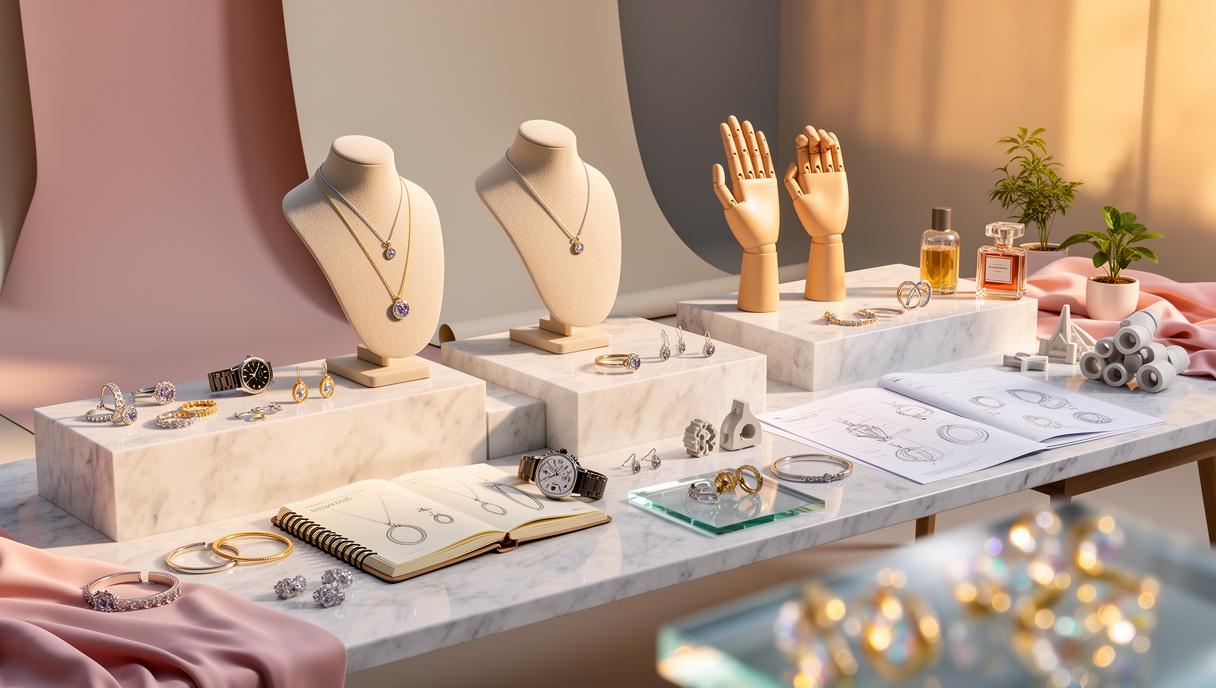
Not all platforms are equal, and jewellery is unforgiving. Look for a jewellery content creation tool purpose-built for reflective metals and refractive stones. The most effective systems accept multiple inputs—sketches, CAD files, and product photos—then translate them into realistic scenes with precise material controls. You should be able to dial in karat-specific gold tones, rhodium sheen, brushed or high-polish finishes, and the exact index of refraction for gemstones so fire and scintillation appear natural. When dispersion, micro-scratches, and prong reflections feel lifelike, conversion rates tend to rise because customers trust what they see.
Lighting control is crucial. A drag-and-drop “virtual studio” with adjustable softboxes, flags, and reflectors lets users sculpt highlights on bezels and halos, lift pavé sparkle, and avoid washed-out diamonds. Shadow and reflection controls prevent floating objects or unrealistic mirror floors. Scene templates—white seamless for PDP, textured backgrounds for editorial, lifestyle environments for brand storytelling—reduce setup time and maintain a consistent visual system across collections. Built-in depth of field and camera presets keep focus where it belongs: the face of the stone, the artisanal detail of the shank, the hallmark stamp.
On-model capabilities have become essential for social and campaign work. Instead of booking talent each time, search a library of diverse hand, ear, wrist, and neckline models with adjustable skin tones and poses. Then iterate: stack rings, mix metals, test hoop sizes, or layer necklaces at different lengths without another shoot. Smart masking and skin-safe retouching ensure prongs don’t clip and chains sit naturally. For e‑commerce and marketplaces, batch tools accelerate variant production—stone colors, metals, and sizes—while preserving consistent framing and lighting. Export profiles should cover transparent PNGs for PDP, high-contrast hero JPGs, and 2K/4K TIFFs for print, all while embedding color profiles to reduce surprises in prepress.
Finally, look for collaboration and brand governance. Shared brand presets lock in lighting ratios, background tones, and crop lines so any team member can generate aligned creatives. Commenting and version history reduce time spent on feedback. Integration with DAM or shop platforms streamlines publishing. And if sustainability and budget are top of mind, a tool that replaces travel-heavy shoots with digital production can lower both carbon impact and overhead—without sacrificing the artisanal character customers expect from fine jewellery.
Workflows and ROI: E‑commerce Velocity, Social Storytelling, and Launch Campaigns
Consider three common scenarios. First, the e‑commerce refresh. A retailer needs 60 new SKUs online within days—studs, tennis bracelets, signet rings—with multiple metals and stones. Using a Jewellery content creation tool, the team imports CADs, applies brand-standard materials, and selects a PDP preset for consistent angle, field of view, and shadow depth. Variants are generated automatically, and 2K packshots are exported with alpha channels for flexible site theming. Because the process is repeatable, updates next season take hours, not weeks, and no one worries about mismatched lighting or scale.
Second, social storytelling. A boutique atelier wants a month of content to highlight a new capsule. With lifestyle templates, the creative can stage pieces on marble, velvet, or reclaimed wood; add soft morning light or a dramatic evening glow; and swap prop styling—silk ribbons, dried florals, or parchment boxes—without sourcing sets. On-model clips show realistic fit: hoop sizes on different lobes, ring stacks on varied hand shapes, layered chains across necklines. Because the visuals are consistent, the grid looks cohesive, yet dynamic. Strategic A/B tests measure which backgrounds and angles drive more engagement and saves.
Third, campaign and lookbook work. For a launch timed to gifting season, the brand needs hero images that feel aspirational but product-true. Creative teams block a narrative arc—discovery, close-up craft, lifestyle context—and build scenes accordingly. A macro shot emphasizes prong craftsmanship and stone fire; a lifestyle frame places the piece in a warm interior; on-model images show wearability across styles. Copy and imagery align easily when angles and lighting remain consistent. When retail partners request co-branded assets, the same scenes can be rendered at 4K with print-safe color, avoiding rush retouch bills.
These workflows translate to tangible ROI. Speed-to-market improves when content creation is decoupled from studio calendars. Marketing gets more testable assets, enabling smarter spend across ads and marketplaces. Operations see fewer reshoots and returns when visuals are accurate—metal tones match expectations, stone sizes read correctly, and micro-details are visible. For local jewellers—whether in London’s workshops, New York studios, Dubai souks, or Mumbai ateliers—the ability to produce premium visuals without building an in-house photo department levels the playing field against bigger brands. And for growing labels balancing creativity with scale, a platform that unites packshots, on-model, and lifestyle under one roof becomes a force multiplier: fewer bottlenecks, better brand cohesion, and content that sells the story as convincingly as it sells the piece.

Rio biochemist turned Tallinn cyber-security strategist. Thiago explains CRISPR diagnostics, Estonian e-residency hacks, and samba rhythm theory. Weekends find him drumming in indie bars and brewing cold-brew chimarrão for colleagues.